
Products
Ballistic Fiberglass
Opaque ballistic panel material that disappears into the wall. Amidon specifies it, supplies it and installs it as part of a complete assembly.
A panel you never see again
Ballistic fiberglass is a rigid, opaque panel made from resin-bonded glass fibre. It is fastened to the structure and then covered — behind drywall, behind millwork, inside a door leaf, under a counter. Once the finish goes back on, nothing about the room looks different.
It is the right answer where concrete is not: an occupied floor of an existing building, a tenant fit-out, a reception desk, a retrofit that has to happen over a weekend without touching the structure.
Amidon does not manufacture ballistic fiberglass. We specify it against the threat, supply it, and install it. That distinction is worth holding on to when you compare quotes — the panel is one line on the page, the assembly around it is the rest, and the assembly is where protection is won or lost.
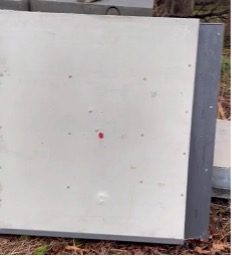
Where it goes
Anywhere the protection has to be invisible and the structure will not take the weight of masonry.
- Wall cavities. Interior and exterior, in retrofit and in new construction.
- Reception and transaction counters. The front of the desk, where the person sitting behind it has nowhere to go.
- Door leaves and frames. Including the frame, which is the part most often left out.
- Safe rooms, server rooms and secure storage. Full enclosure rather than a single protected face.
- Guard booths and screening points. Small footprints where added mass is not an option.
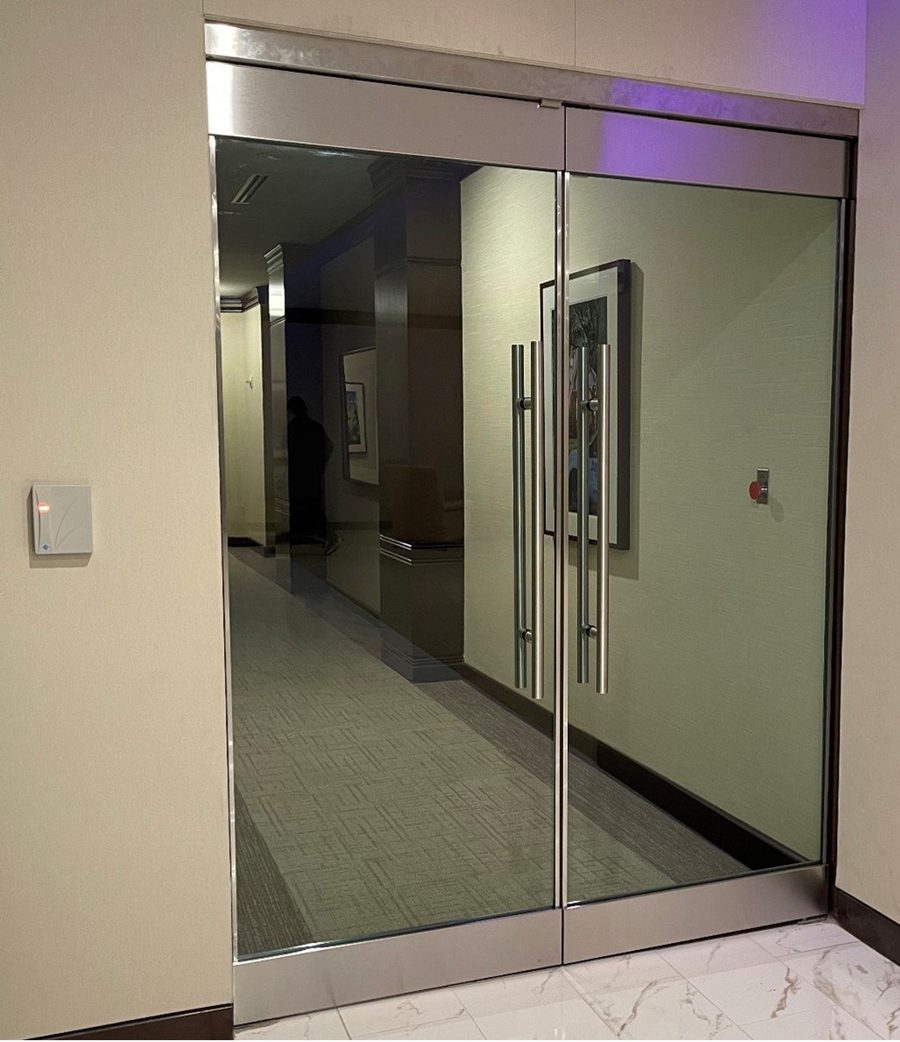
The wall is only as good as the opening
A protected wall with an unprotected door is a protected wall with a door in it. Doors, frames, vision panels, transaction windows and pass-throughs have to be specified against the same threat definition as the wall around them, or the assembly has a hole in it that no panel count will close.
We cite UL 752 for threat definitions — the round, the number of shots, the spacing between them. We do not claim a listing under it, and it is worth noticing whether the people quoting you do. A listing belongs to one manufacturer’s one tested assembly. It does not travel to a material on its own, and it does not travel to your building.
Performance belongs to the assembly that was tested, at the thickness and obliquity it was tested at, against the round it was tested against. Ask for those conditions. If a supplier will not give them to you, the number is decoration.
How we work with it
Three steps, and the third is the one that decides whether any of it worked.
- 1
Assess
What is the threat, what is the existing construction, who has to keep working while the work happens, and what is actually load-bearing. A site visit where it matters.
- 2
Specify
Panel, fasteners, joint treatment, backing, and every opening in the protected line. Written as one assembly rather than a shopping list, because that is how it either holds or does not.
- 3
Install
Our crews do the work, or we support yours. Joints, seams and penetrations are where field installations come apart, so that is where the time goes.
Working with Amidon
Amidon is a Service-Disabled Veteran-Owned Small Business. We supply and install ballistic fiberglass alongside our own materials — Amidon Shield, ArmorBlock, eShield and vShield — so a single protected line can change material where the building changes, without changing who is responsible for it.
We will also tell you when fiberglass is the wrong choice. On a perimeter, on a standoff wall, on anything that has to take a vehicle or a blast, it is.
Securing a facility, a safe room, or a counter?
Tell us what you are protecting and from what, and we will tell you which material fits and how it installs.
Talk to Amidon