
Perimeter & Access Security
Security Fencing & Gates
The first layer a threat meets and the longest one on the site. Welded anti-climb fencing, cut-resistant chain link, sliding gates and relocatable barrier fence — specified against the same threat basis as the barrier line and the hardened structure behind it.
What a fence is for
A fence does not stop a determined intruder. It buys the minutes your response needs.
Every fence can be beaten. The useful question is how long it takes, with which tools, and whether anybody sees it happening.
That is why delay time, not height, is the number to specify. A standard fence line is often the longest and least-considered element on a protected site — bought by the linear foot from the site package, while the gate, the barrier and the wall behind it were each specified against a threat. The fence then sets the delay for the whole perimeter.
This line closes that gap. Each product below has a defined job: deny the climb, slow the cut, control the opening, or move the line when the site changes. Amidon selects them against the response time the site actually has.
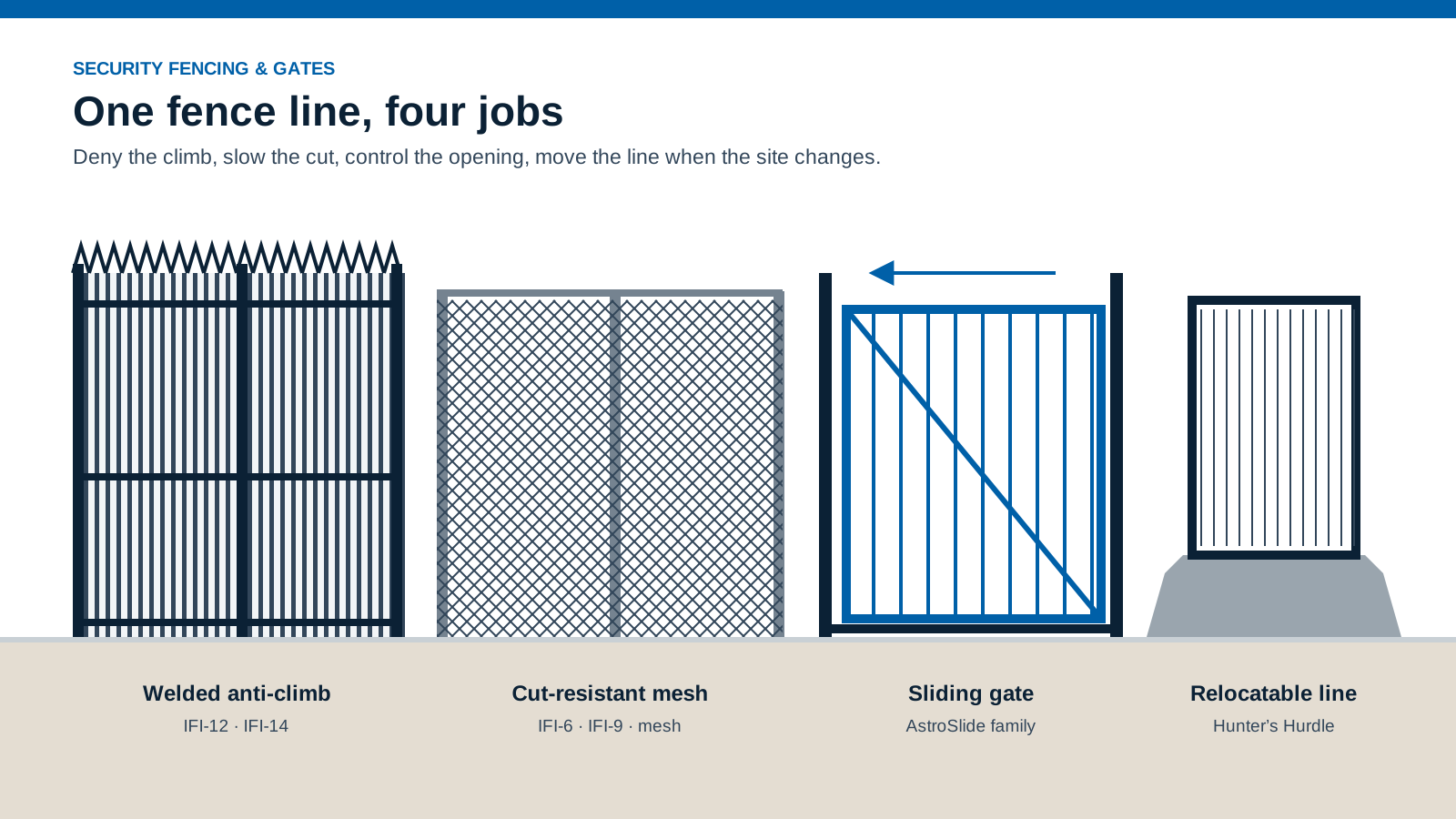
Welded anti-climb fencing
For the line that must not be scaled.
Fully welded panel systems with no exposed bolts or brackets to attack. The choice between them is mostly about how much visibility the site wants and how it has to look.
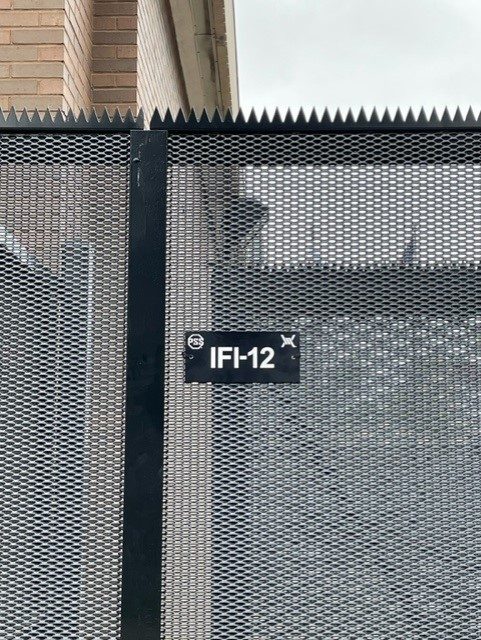
IFI-12
Mini Louver Anti-Climb Fence
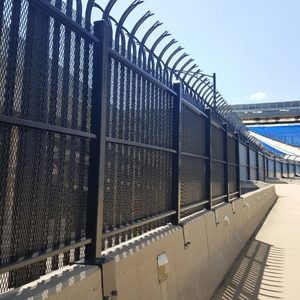
Fully welded, bracket-less panel system with an integrated climb-deterrent top and roughly 25% visibility through the infill. Infill options include expanded metal, palisade pickets, wire mesh or chain link. Powder-coated in a range of colors. U.S. Patent D877,932.
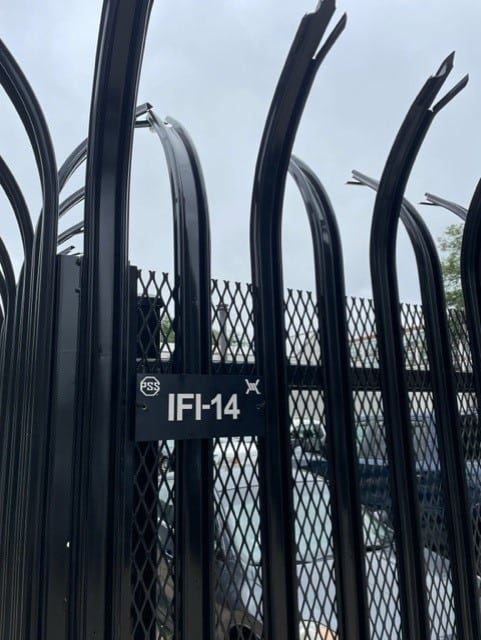
IFI-14
Palisade Fence
Fully welded picket-style perimeter fence with integrated climb deterrence and no exposed bolts or brackets. A conventional palisade appearance for frontages and campuses where the fence is seen as much as it is tested. Adapts to terrain; powder-coated in a range of colors. U.S. Patent D828,579.
| Characteristic | Published |
|---|---|
| Forced-entry test basis | ASTM F2781 |
| Manual breach testing | Two-person team with sledgehammer and pry bar did not breach within the 15-minute test limit |
| Design wind load | 105–120+ mph |
| Construction | Fully welded; no exposed bolts or brackets |
| Coating | Powder coat to AAMA 2604 / AAMA 2605 guidelines |
| Vehicle impact | Not crash-tested as standard. ASTM F2656 configurations are scoped per project |
Manufacturer-published characteristics. Forced-entry and breach results are configuration-specific; Amidon issues the test documentation for the exact quoted configuration, with its test conditions, before submittal.
Cut-resistant chain link
Chain link, built to be slow to cut.
Heavier wire and a tighter weave change what a hand tool can do to the mesh. These keep the visibility and economy of chain link while adding delay.
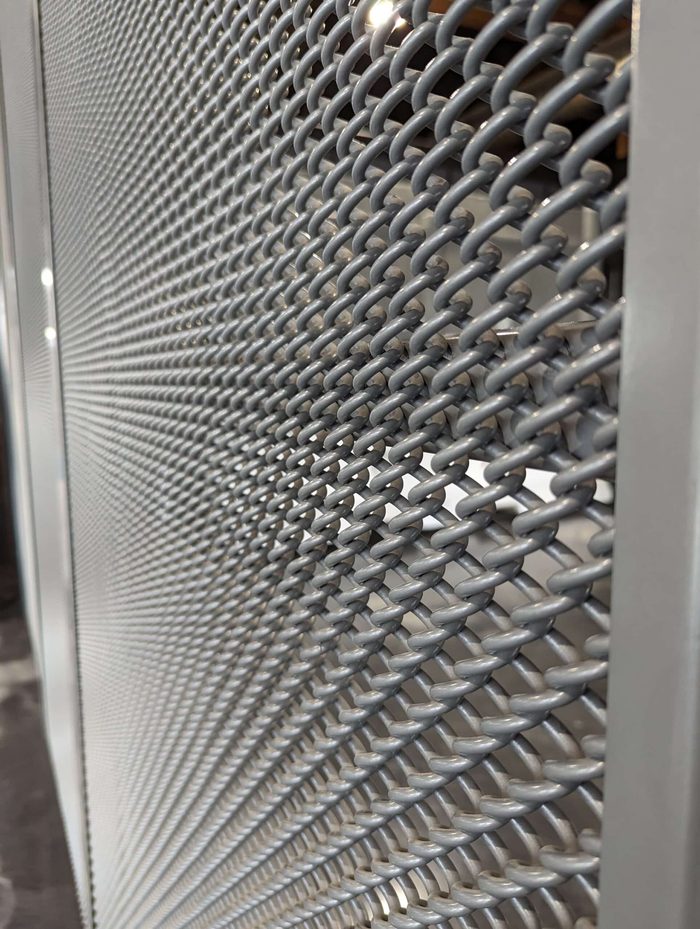
IFI-6
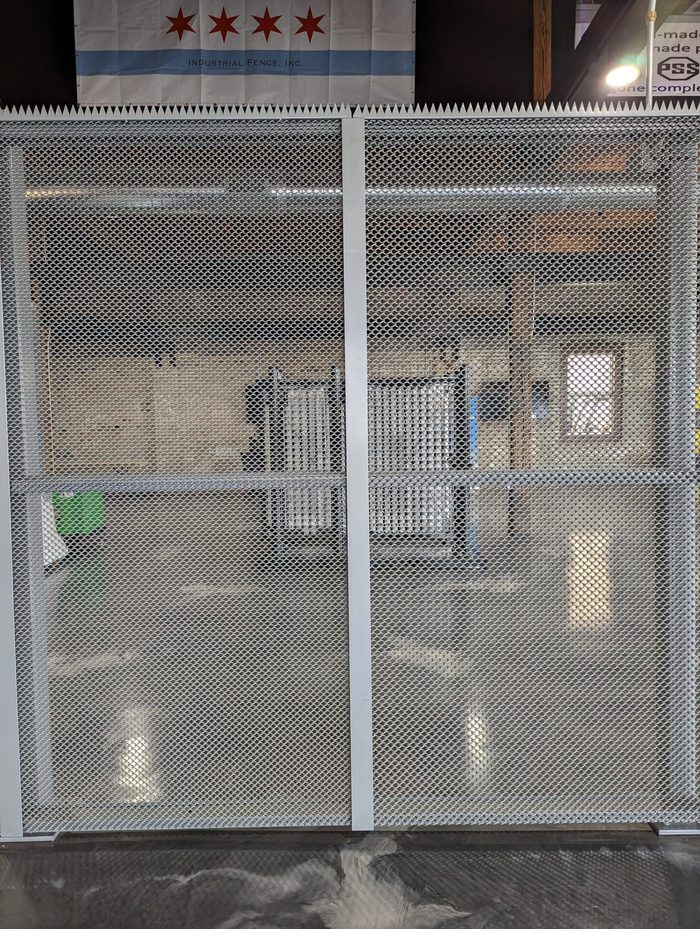
Extreme Cut Chain Link Fence
6-gauge wire in a 5/8-inch weave, at the heavy end of a family that runs from 9-gauge, 2-inch weave upward. Manufacturer testing with wire and bolt cutters recorded penetration times from 27 seconds to over 6 minutes, depending on gauge and weave. Also tested against powered saws, grinders and a cutting torch.
IFI-9
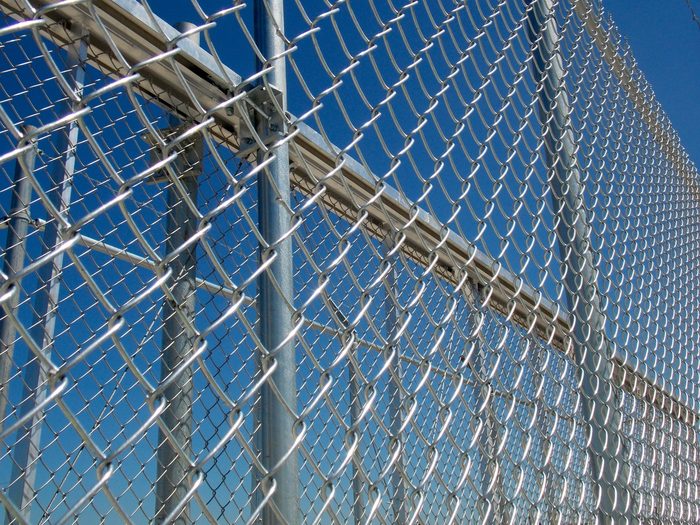
Severe Cut Chain Link
9-gauge wire in a 3/8-inch mini weave, with a bracketless terminal-post wrap and no exposed mechanical fasteners. In manufacturer testing with wire cutters, the mesh resisted breach for 4 minutes 32 seconds. Designed for rapid deployment and adapts to terrain.
By the roll
Chain Link Fence Mesh
Galvanized steel chain link mesh made in the U.S. and supplied in 50-foot rolls, in heights from 5 to 12 feet. Available in 6- and 9-gauge wire with 2-inch, 1-inch, 5/8-inch and 3/8-inch weaves, including the IFI-6 and IFI-9 meshes above, for new lines and for upgrading existing ones.
Cut times are manufacturer-reported and depend on the tool, the operator and the configuration. Amidon issues the test documentation for the exact mesh and gauge quoted.
Sliding gates
The opening in the fence, matched to the fence.
A gate is the part of the fence line that has to move, which makes it the part most often specified to a lower standard. Three sliding gates, matched to the fence systems above.
Welded fence lines
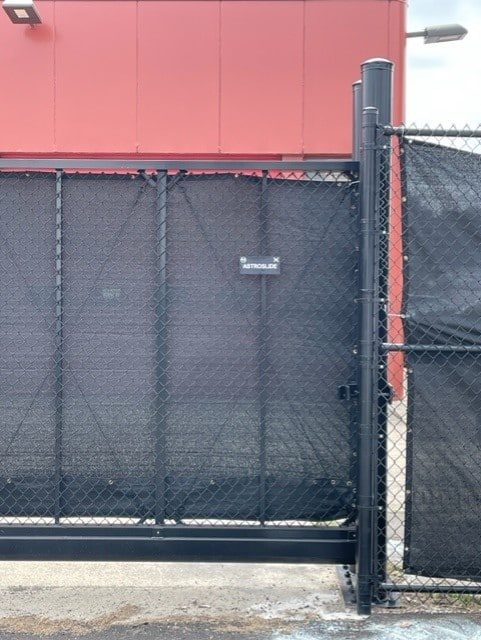
AstroSlide
Sliding security gate with a dual top-rail system and boltless construction. Published gate-weight capacity up to 2,100 lb. Integrates with the IFI-12 and IFI-14 welded fence systems and with conventional chain link.
Chain link lines
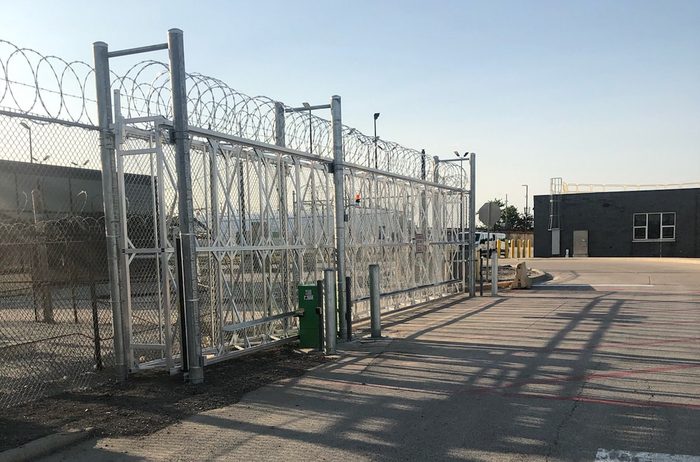
AstroSlide CL
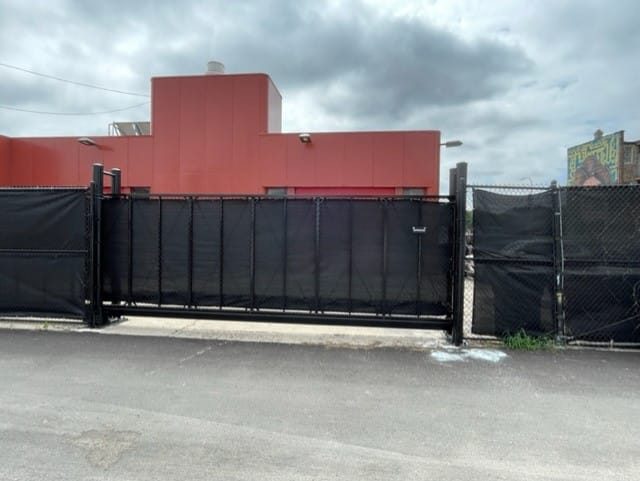
Aluminum box-frame sliding gate on a bottom-rail track, built to match IFI-6 and IFI-9 chain link fence lines. Published gate-weight capacity up to 6,000 lb. For industrial and commercial access points.
Anti-ram
AstroSlide Extreme
Hand-operated sliding gate on a bottom-rail track, with a published gate-weight capacity up to 6,000 lb. Published to DOS K4, K8 and K12 anti-ram ratings. Integrates with IFI-12, IFI-14 and chain link fence lines. For base access points and government sites.
Anti-ram ratings apply to the tested gate assembly and its foundation, not to the fence line it sits in. Amidon issues the test report for the exact quoted configuration with the quotation.
Relocatable barrier fence
Hunter’s Hurdle
A fence line that can be moved. All-welded steel framework with 6-gauge, 5/8-inch chain link infill, mounted on movable concrete foundations instead of posts set in the ground.
That makes it the answer for temporary and changing sites — construction phases, event perimeters, forward and expeditionary positions, and sites where excavation is not an option. The steel frame sits on crash-tested jersey-type barrier units, or on Amidon high-mass concrete units, so the same line that controls pedestrians can also take the vehicle approach into account.
Protective performance depends on the foundation unit and the configuration; Amidon specifies the combination against the threat the site has defined.
Choosing the fence
Four questions settle most fence lines.
- 1
How long must it hold?
Start from the response time: detection, assessment and arrival. The fence has to delay at least that long against the tools a credible attacker carries.
- 2
Climb, cut or vehicle?
Welded anti-climb panels answer scaling. Heavy-gauge tight-weave chain link answers cutting. Vehicles need a crash-tested gate, barrier or foundation — a fence alone does not stop one.
- 3
Does it need to move?
Permanent lines go in on posts. Phased, temporary and no-dig sites take the relocatable barrier fence on movable foundations.
- 4
What does the gate carry?
Match the gate to the fence system and to the vehicle threat at that opening. The gate is where the fence line is most often weakest.
Where it fits
Built for perimeters measured in minutes, not feet.
- Military installations and base perimeters
- Correctional and detention facilities
- Utility substations and generation sites
- Data centers and AI infrastructure
- Battery energy storage sites
- Water and wastewater facilities
- Ports, airports and rail yards
- Government and corporate campuses
Program questions
What to settle before ordering.
Who manufactures this line?
The fencing, gates and relocatable barrier fence on this page are manufactured in the United States by Perimeter Security Solutions (PSS), a veteran-owned manufacturer, and specified, supplied and integrated by Amidon. Current cut sheets, CAD drawings and test documentation are issued with the quotation.
Can Amidon upgrade an existing fence line?
Often, yes. Cut-resistant mesh can replace standard chain link on existing posts where the posts and footings are adequate, and a matched sliding gate can replace a weak opening. We assess the existing line before recommending either.
Will a security fence stop a vehicle?
Not on its own. These fence systems are not crash-tested as standard. Vehicle threats are answered by crash-tested gates, vehicle barriers, bollards or barrier foundations, specified against the threat vehicle and the approach. Amidon designs the fence and the vehicle line together.
Can Amidon provide a government quotation?
Yes. Amidon scopes the perimeter, configures the fence, gate and foundation combination, and issues a quotation with supporting documentation for the exact products proposed. Domestic-preference and trade-agreement determinations are made against the terms of the individual solicitation.
AstroSlide, Hunter’s Hurdle, IFI-6, IFI-9, IFI-12 and IFI-14 are product names of Perimeter Security Solutions. Product photographs courtesy of Perimeter Security Solutions.
Tell us how long the fence has to hold.
Give us the site, the threat, the response time and the length of the line. We will come back with a fence, gate and barrier configuration for the whole perimeter, not a price per foot.
Discuss a fence line